
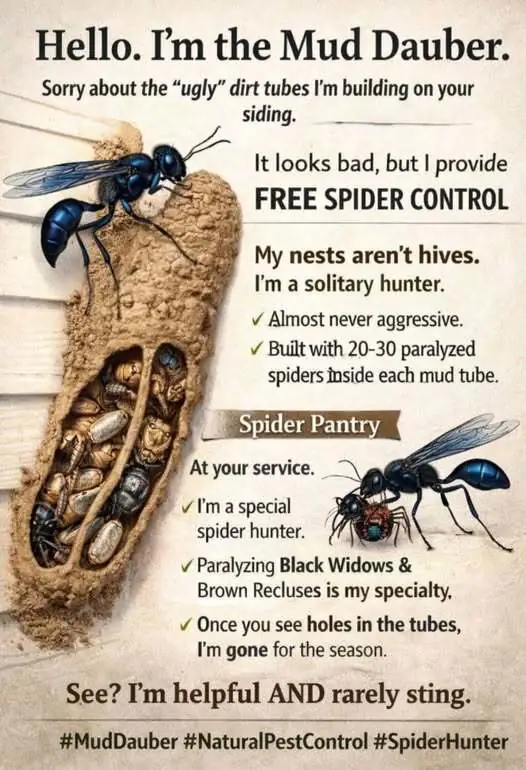
If you’ve ever noticed small mud tubes attached to your siding, brick, or garage, you may have encountered a mud dauber nest. Many homeowners immediately assume these are dangerous wasps and remove them right away.
However, mud daubers are actually one of the most beneficial insects you can have around your home. Those small dirt tubes might not look attractive, but they provide a valuable service: natural spider control.
Before scraping them away, it’s worth understanding why mud daubers are helpful and why leaving them alone—at least temporarily—can benefit your home.
What Are Mud Daubers?
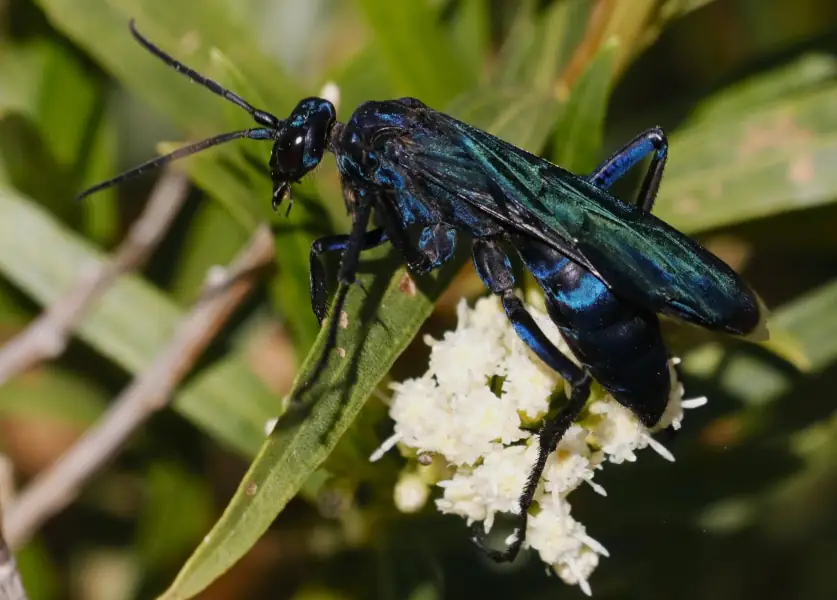

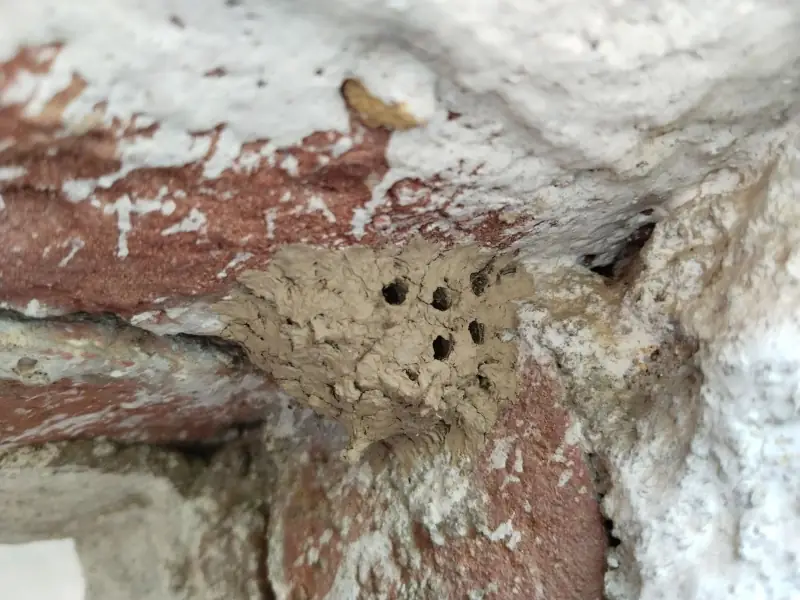
Mud daubers are solitary wasps that build narrow tubes made of mud on walls, eaves, garages, sheds, and other sheltered structures.
Unlike yellowjackets or hornets, mud daubers:
Do not live in colonies
Do not aggressively defend their nests
Rarely sting people
Spend most of their time hunting spiders
Because they are solitary insects, they are generally far less aggressive than other wasps homeowners worry about.
Mud Daubers Provide Natural Spider Control
One of the biggest benefits of mud daubers is their role as natural pest control.
Mud daubers hunt spiders and place them inside their mud tubes as food for their larvae. Each tube may contain 20–30 paralyzed spiders.
This means even a few mud dauber nests around your home could eliminate hundreds of spiders during the season.
They are known to hunt:
Black widow spiders
Brown recluse spiders
Orb weavers
Wolf spiders
For homeowners in Texas and the Dallas–Fort Worth area, where venomous spiders can be a concern, mud daubers can actually help keep these populations under control.
Mud Daubers Are Rarely Aggressive
Many people worry that mud daubers will sting if they build nests on a home. In reality, these wasps are extremely docile.
Because they live alone and do not defend colonies, they rarely interact with people. In most cases:
Mud daubers ignore human activity
They focus on hunting spiders
Stings are very uncommon
This makes them far less concerning than paper wasps, hornets, or yellowjackets.
Their Nests Are Temporary
Mud dauber nests are not permanent structures.
Once the larvae mature and emerge:
The adult wasp leaves the nest
Small holes appear in the mud tubes
The nest becomes inactive
At that point, homeowners can easily remove the empty tubes if desired.
Many people simply leave the nests until the end of the season, allowing the wasps to finish their life cycle and provide natural pest control.
Benefits of Leaving Mud Dauber Nests Alone
Allowing mud daubers to remain on your property for a season can provide several benefits:
1. Natural pest control
They significantly reduce spider populations.
2. Reduced pesticide use
Fewer spiders may mean less need for chemical pest control.
3. Safe coexistence
They are far less aggressive than other wasp species.
4. Temporary presence
Their nests are only used for a short period before being abandoned.
When You Might Want to Remove Mud Dauber Nests
While mud daubers are beneficial, there are situations where removal may be appropriate.
For example:
Nests built inside garages or sheds
Large numbers forming on visible exterior areas
Locations near doorways or frequently used entrances
If removal is necessary, it is best done after the tubes show exit holes, indicating the wasps have already emerged.
A Helpful Insect Around Your Home
Although mud dauber nests may not look appealing, these insects are quiet allies in controlling spider populations. Their presence around your home can reduce pests naturally and safely.
Instead of viewing them as a nuisance, homeowners may want to consider mud daubers as beneficial insects doing valuable work around the property.
Need Help Maintaining Your Property?
At PMI Metroplex Properties, we help homeowners protect and maintain their investments. From property inspections to maintenance coordination, our team helps ensure your home stays safe, functional, and well cared for.
If you’re looking for professional property management services in the Dallas–Fort Worth area, contact PMI Metroplex Properties to learn how we can help.